PRO-Gorizont Seismic Data Processing System
PRO-Gorizont is a seismic data processing system based on the Parametric Reflection Sweep (PRO) method. Unlike classical CDP (OGT), the method uses diffraction transformation and forms the seismic image via envelopes of a set of PRO operators, so the stacking result does not depend on the shape or character of geological boundaries.
Limitations of the Classical CDP Method
- Requirement for a hyperbolic travel-time curve, which is almost never satisfied in real media.
- Stacking only specular reflections — diffracted and heterogeneous media remain out of scope.
- CDP velocities depend on the dip angles of boundaries, distorting the real velocity model.
- High regularity of the acquisition system is required.
- Variation of average velocity within the travel-time curve is not taken into account (or an η-correction is introduced).
Advantages of PRO-Gorizont
- Stacking not only specular but also diffracted components of the wavefield — high informativity in complex media with disjunctive structures.
- Operation under inverse values of elastic wave velocities.
- Ability to vary effective velocity within the travel-time curve.
- No requirement for strict regularity of the acquisition system.
- Independence of the result from travel-time hyperbolicity.
Fundamentals of the PRO Method
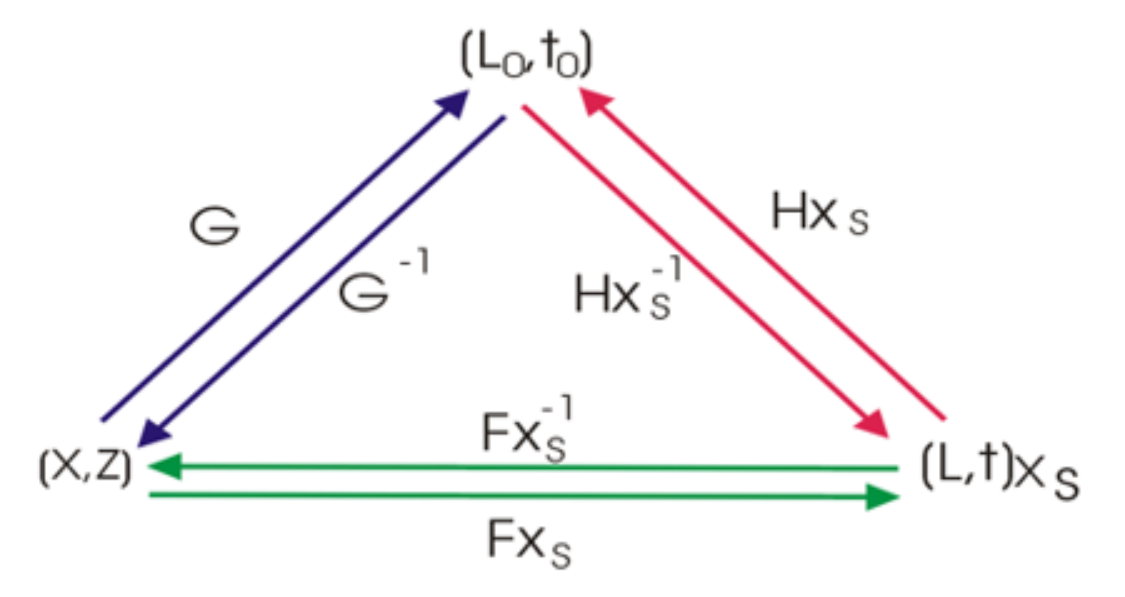
The system is based on the Parametric Reflection Sweep (PRO) method, first published in 1977 by V.V. Kondrashkov. Instead of fitting data to a fixed formula (as in CDP), a diffraction transformation is used. The method operates in three interrelated spaces: source seismograms (l, t), time section (l₀, t₀), and the real geological model (x, z).
Comparison of Methods: Velocity Determination
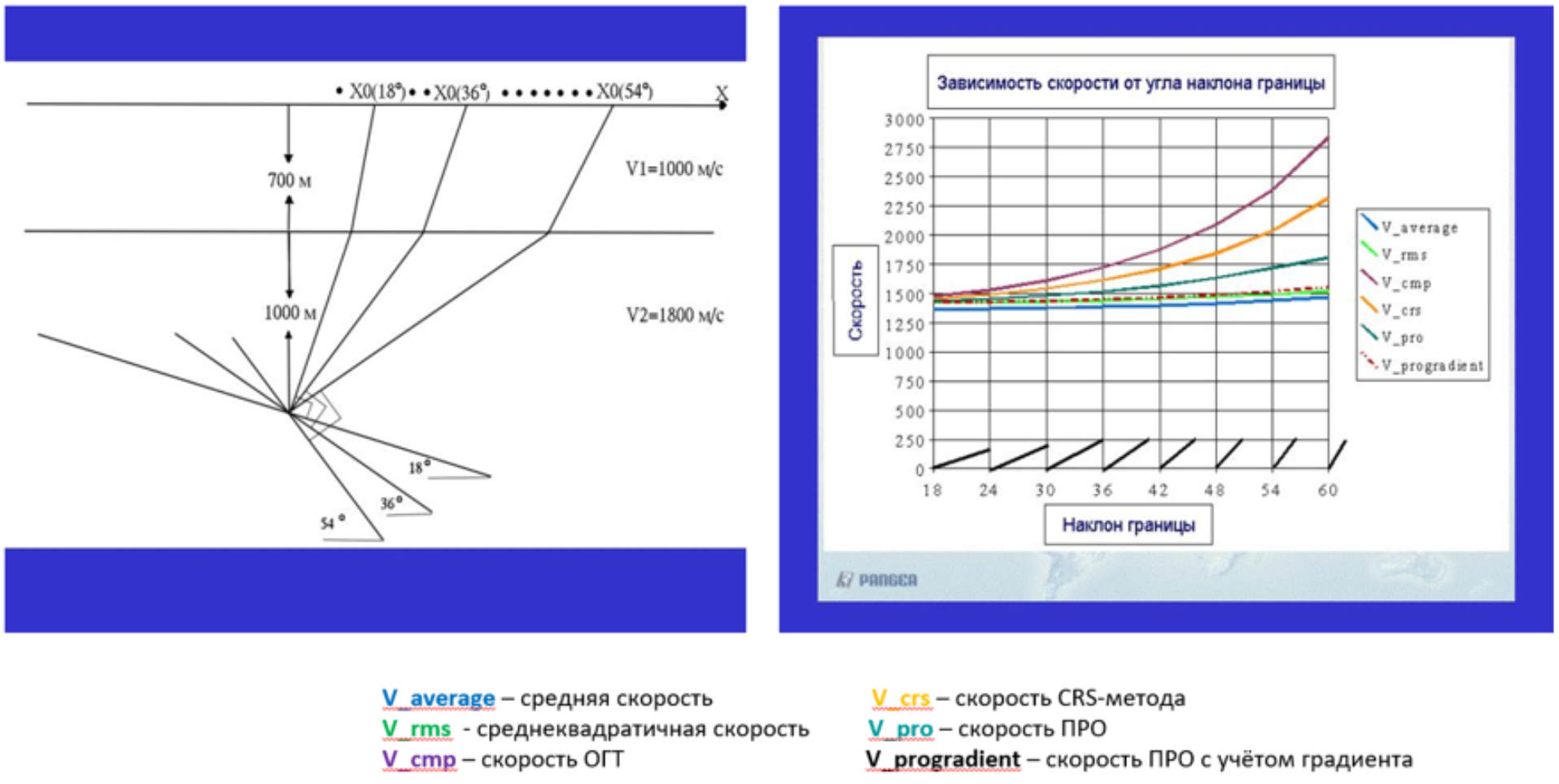
- In the CDP method, velocity (V_CDP) is determined as an averaged value and depends on the dip angle of the boundary.
- In the PRO method, velocity (V_PRO) is determined independently for each trace and does not depend on angles or boundary shape.
- On model data, as the dip angle increases, V_CDP rises significantly, while V_PRO remains stable and matches the real medium velocity.
Comparison with Well Data
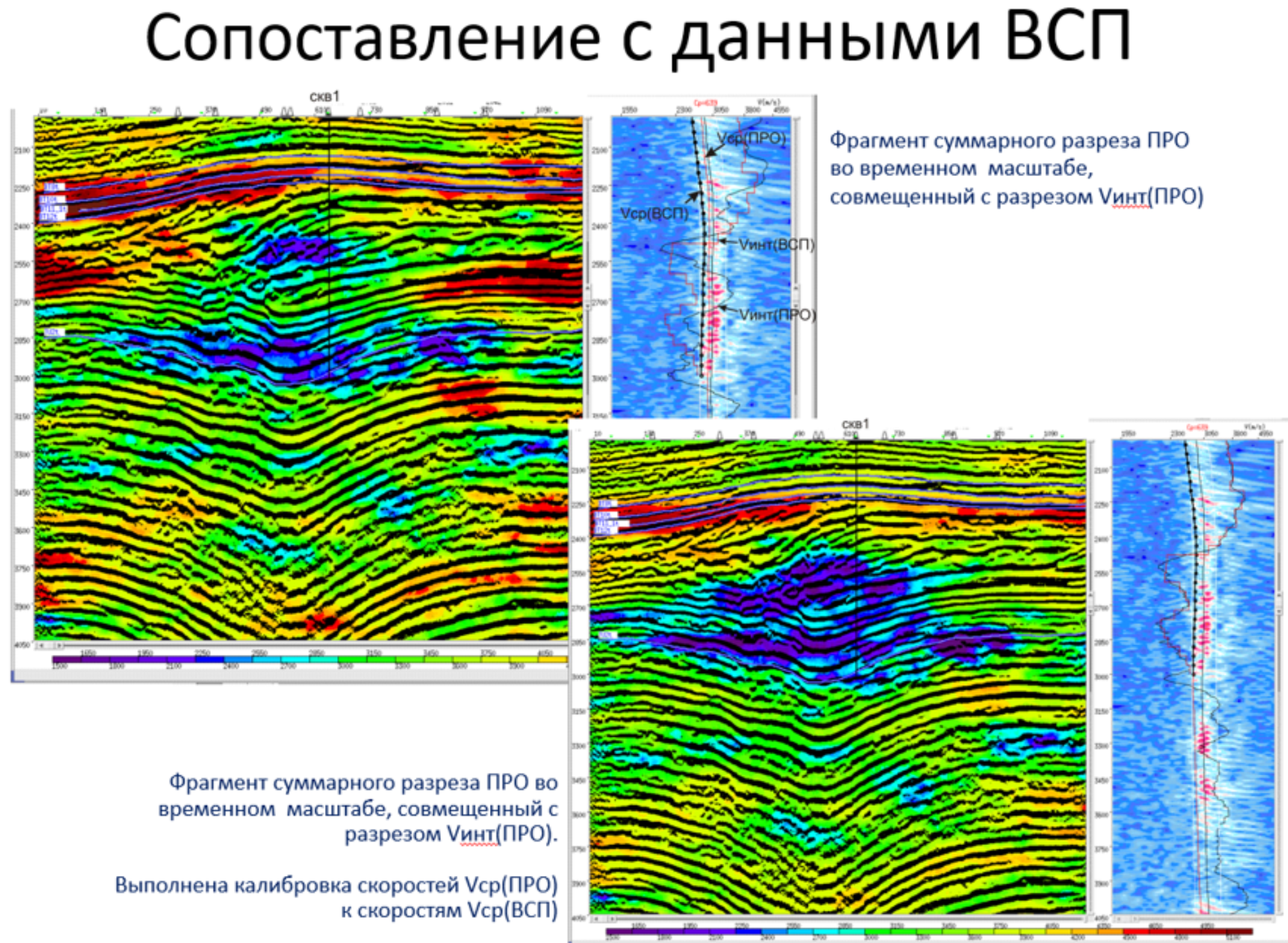
To verify the correctness of PRO velocity calculations, they are compared with independent data — acoustic logging (AC) and vertical seismic profiling (VSP) results. On real areas, the discrepancy between Vavg(PRO) and Vavg(AC/VSP) curves is about 8–10%.
Examples of Geological Results
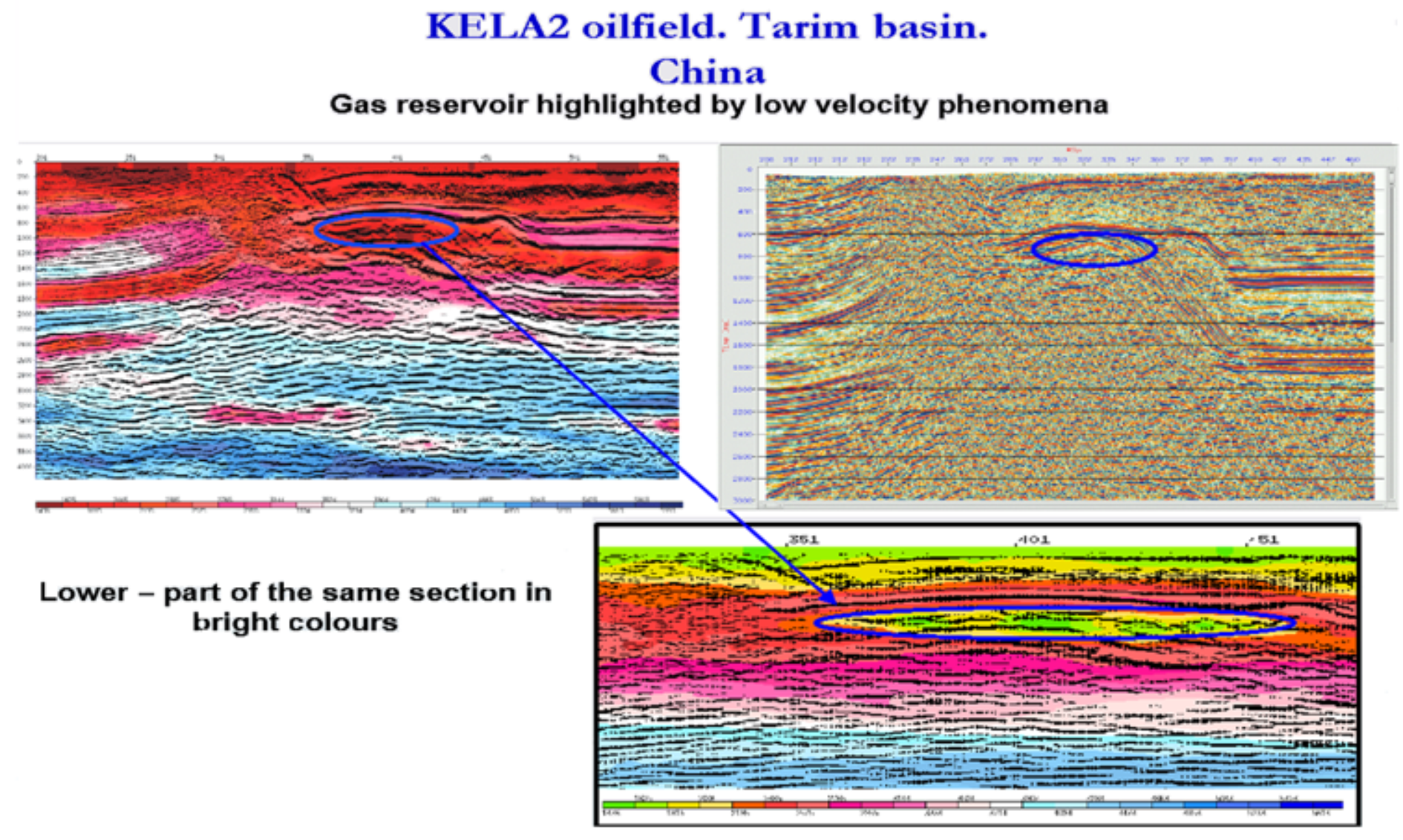
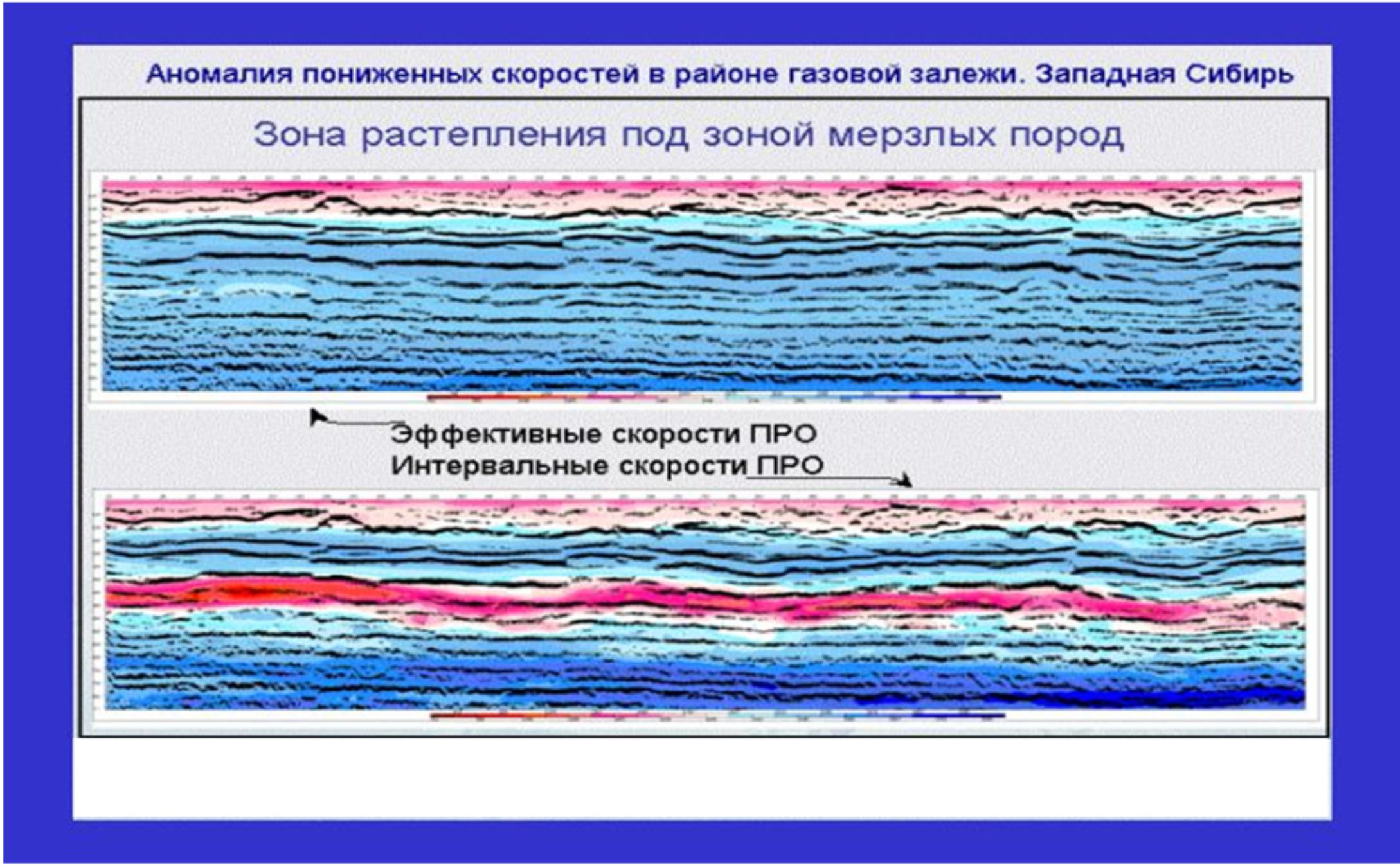
- Gas reservoirs: identification of accumulations by low-velocity anomalies.
- Thaw zones: mapping of permafrost and taliks (e.g., in Western Siberia).
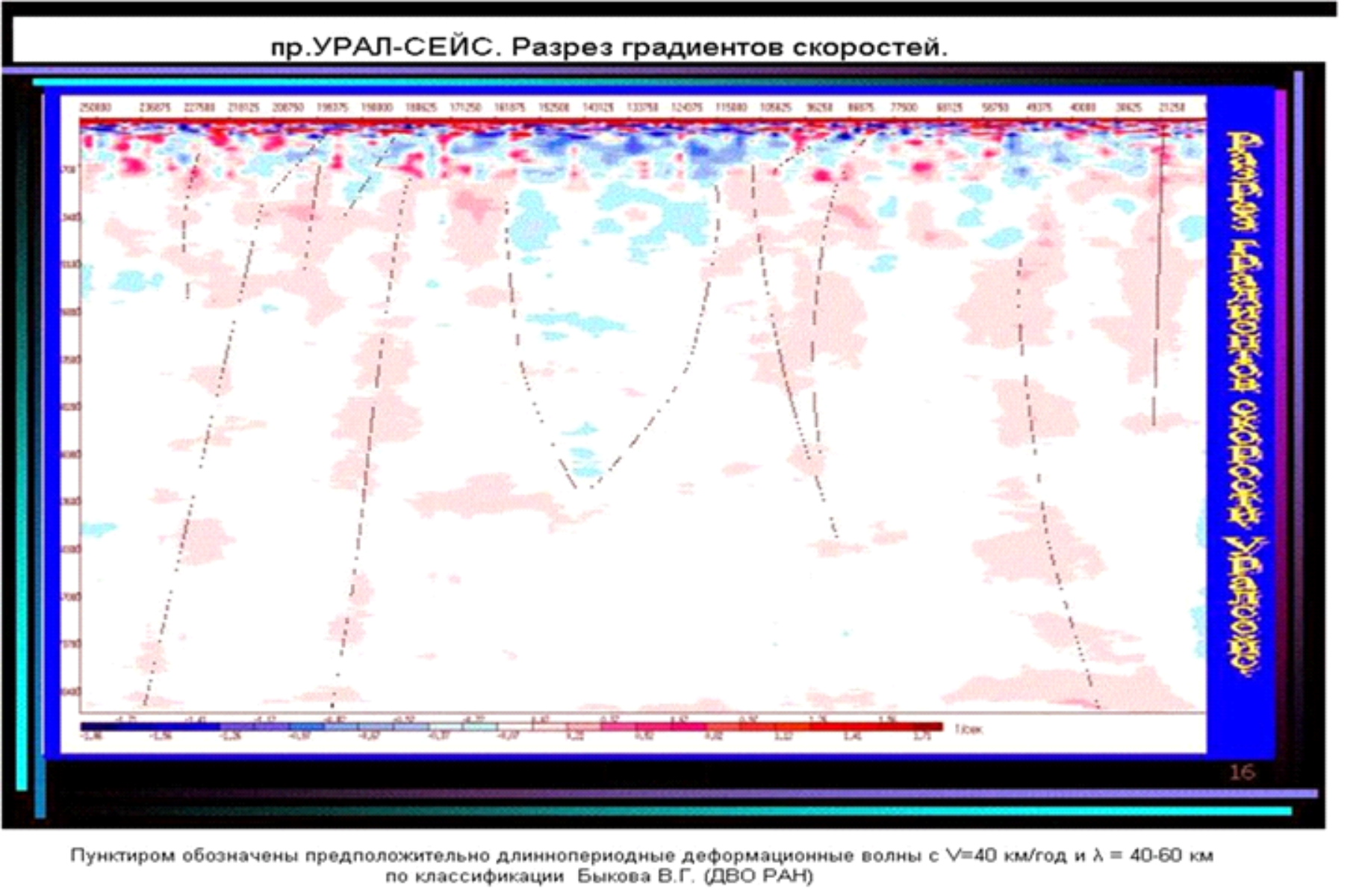
- Deep structures: construction of depth-velocity models and velocity gradient sections for assessing rock stress state.
Application Experience
The system has been used in industrial seismic exploration for more than 20 years. Tens of thousands of line kilometers have been processed under various seismic-geological conditions:
- Russia: Eastern and Western Siberia, Volga-Ural and Timan-Pechora petroleum provinces, Black and Caspian Sea offshore areas.
- Abroad: Kazakhstan (Karachaganak, Tengiz), China (Tarim, Sichuan), India, Brazil, Namibia, Yemen, Colombia.
Processing Functionality
- Converted-wave velocity analysis: determination of average, RMS, and interval velocities.
- Lateral velocity gradient accounting: determination of horizontal velocity gradient and separation of this effect from converted-wave parameters.
- Processing from topography: data processing directly from topography, accounting for curvature and near-surface effects.
- PRO migration: preliminary calculation of migration velocities with account for boundary dip angles.
- Two-parameter analysis: V(t₀, γ) analysis to account for converted-wave parameters.
- R-procedures: analysis of ray incidence and boundary dip angles to improve detail.
Conclusion
- PRO-Gorizont provides reliable velocity models in complex geological conditions where CDP methods are limited.
- The correctness of calculations is confirmed by comparison with well data (VSP, AC).
- PRO interval velocities are an independent attribute that can be used in seismic interpretation to refine the geological structure.